Neighbor News
How to have the perfect smile?
Dr. Rhona tells everything you need about cosmetic grooming, dental technology, and what to look for when it comes to finding perfect smile.


There is little doubt that a perfect smile is a wonderful thing. However, despite the fact that we laugh about eight times a day, research shows that many of us are aware of our teeth health and, contrary to popular belief, we are not very good at taking care of our teeth.
A OnePoll survey found that 57 percent of Americans feel insecure about the appearance of their teeth, and hide it when they laugh or smile. As it turns out, this dental distress is not confined to the United States, Mintel reports that 30 percent of Britons are unhappy or very unhappy with their teeth and that 69 percent believe that having visibly damaged teeth impacts their emotional well-being. However, despite these concerns, it is clear that we are not taking proper care of our teeth. Almost one in five people visit the dentist only when something is wrong (FYI, men are worse than women in this regard), and 29 percent admit they didn't visit the dentist at all in the past six months, and only 63 percent of people clean teeth twice a day.
That said, things are changing, slowly but surely, which is why the global cosmetic dentistry market is currently valued at $18.79 trillion and is expected to reach $32.73 trillion by 2026. According to the dentist cosmetician and international lecturer, Dr. Rhona Eskander: “The days when we went to the dentist and blindly did what we were told are over. We are much more involved in every aspect of our appearance and are now used to being in control of every decision that affects our health and beauty.”
Find out what's happening in Wichitafor free with the latest updates from Patch.
A perfect smile for Instagram

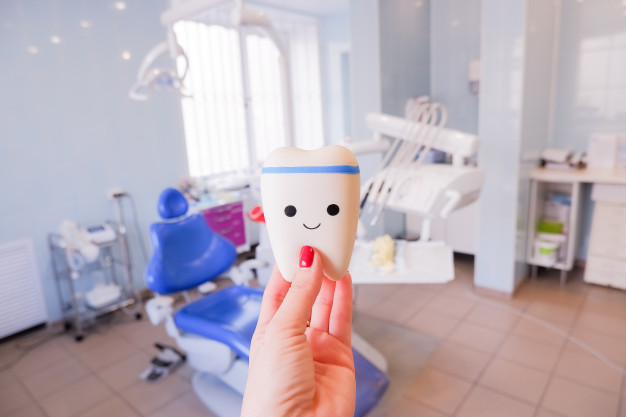
When it comes to our teeth, this means that we have higher expectations than ever before; the current trend is for super straight and strikingly white teeth and - probably not so surprisingly - it has been fuelled by social media. "People want to look like they have a filter," says Eskander. “There are many Instagram and Snapchat filters that make your nose look smaller, your lips fuller, and your teeth bigger and brighter. People are addicted to seeing this version of themselves and they want to see themselves that way in real life, even though it is something that is not achievable.” It is for this reason that Instagram announced last October that it will remove all augmented reality filters with plastic surgery effects. However, it remains to be seen whether this move has a real impact on the way people - especially easily influenced young people and adults - see themselves and how they aspire to see themselves.
But what about the rest of us? Could it be that most people who are considering some form of cosmetic dentistry are just looking to improve what they already have? After all, the Ross Geller-like teeth we see on Instagram and on reality TV shows are not for cowards. "I think most of us are looking for a more natural look," says Eskander.
Find out what's happening in Wichitafor free with the latest updates from Patch.
The most popular cosmetic trends
At the top of every list is straightening your teeth, says Eskander. “People continue to choose fixed braces, particularly those that are placed behind the teeth. No discreet, but the downside is that they are expensive and can cut your tongue. " As far as Eskander is concerned, Invisalign - the invisible braces that can be put in and out of the mouth - is the perfect example. “You use Invisalign for 22 hours a day and your teeth straighten, it's that simple. Although it has been on the market for several years, we are seeing many innovations with Invisalign. Moving away from unpleasant molds, Invisalign uses iTero, a technological tool that scans the teeth and shows in just one minute what the results will be at the end of the treatment.
And technological advances keep coming. The same type of imaging technology that we see in the deepfake videos (if you haven't seen the video of Bill Hader becoming Tom Cruise, you should) is ready to change dentistry. "Your smile is not static, so we need to make sure we are thinking about what your smile will look like when you move, talk and laugh before starting treatment," says Eskander. Digital smile design is a technique that uses photographs and videos of you to virtually bring your new teeth to life and to superimpose them on your face, being the last test before acquiring the treatment. Invisalign will launch the technology soon and is expected to change the rules of the game.
Caution: do not be convinced by the direct-to-consumer home teeth alignment kits, as your teeth must be evaluated in real life by a dentist to be sure that your gums and teeth are suitable for these treatments. "There have been some cases where people have pulled their teeth out because they had gum disease and they were not the correct prospects for treatment," Eskander says.
Healthy teeth using dental technology
Cosmetic dentistry can't work miracles, so if your foundation is weak, you probably won't see the expected results. Brushing your teeth twice a day and flossing are two non-negotiable things if you don't want to see deterioration, but if this happens, new dental technologies are proving to be an efficient stopping tool. "iTero scans teeth and detects wear - without x-rays. You can imagine how useful this is if you're pregnant and can't get x-rays. It's amazing, "says Eskander.
If you've ever tried to escape a dental assessment, you're ready to be amazed. Not content with just cleaning, the newest electric toothbrushes connect to an app on your phone so you can identify at a glance where your brushing routine might be failing. Toothbrushes such as Genius X by Oral-B with artificial intelligence and Sonicare FlexCare Platinum Connected by Philips use motion sensors to analyze your brushing technique and generate a report of the areas in which they need improvement. Eskander believes the day is not far off when dentists will also be able to use this information. "Your dentist can collect your information through the app and then can create a program tailored to your own needs."
Search for natural alternatives
Like most sectors of the health and beauty industry, oral care is feeling the impact of consumers looking for organic and natural products. However, unlike your skincare routine, your home dental regimen is unlikely to benefit from natural products. Charcoal toothpaste, for example, should be avoided at all costs.
"People have become too obsessed with health, to the point that they adopt whatever trend arises," says Eskander. “Charcoal has its benefits - for example, it is used in hospitals to counteract the effects of the poison - but it has no place in your dental care routine. In the worst case, it is too abrasive and wears down the enamel, damaging your teeth and staining white amalgam, and because it is black you tend to brush harder to remove it. At best, it does absolutely nothing, becoming a total waste of money.”
The future of teeth
The holy grail of dentistry is a tooth that can regenerate itself. If this sounds like science fiction, you might be surprised to learn that this technology is already well advanced to become a reality. Researchers at King's College London are looking for ways to mobilize stem cells from teeth to repair damage and even to regenerate tissue. They are still a long way from human testing, but fillings and crowns are likely to be a thing of the past in a decade. That is definitely something that will make all of us smile if it becomes reality.