


How is time passing so quickly? January's Lucci's List is complete, and I have a sneak preview of books to look forward to in February.
I would love to hear your feedback on my reviews. Do you agree or disagree with my impressions of these books? Do you have books you would like to see reviewed? I focus my reviews on independent and local authors, but I am always down for a good book!
Please feel welcome to contact me. Happy reading!
Find out what's happening in Walthamfor free with the latest updates from Patch.
MEMOIR:
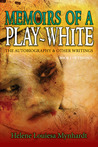
"Memoirs of a Play-White" by Helene Louisea Mynhardt is a memoir of growing up in Africa during the injustice of apartheid. It is a must read for all ages.
This powerful story is told in third person, allowing the reader to understand the historical facts and see with clarity the truth of the horrors of this era, without being clouded by personal emotion.
Find out what's happening in Walthamfor free with the latest updates from Patch.
The author's life story starts out with her grandmother, an orphan who became a single mother at the age of thirteen. Undeterred by the misogynistic society she lived in, Elena raised her daughter Doris in a mud hut. She farmed a vast healthy array of vegetables and raised chickens to sell eggs. She made sure her child never went hungry. Elena was a petite woman, but large in her desire to raise her child with the best life available.
Doris, the author's mother, was "a husky, muscle-bound female built solidly. She was strong as as an ox, and had the power to move heavy weights or perform physically demanding tasks boys would usually do... She was convinced God had intended for her to be a boy, but had a last minute change of plans."
Elena married a widower who had his own children, was cruel, but wealthy. Emotionally distant and unaffectionate, he managed to express his sense of masculine superiority. A Zulu, his face was scourged with tribal scars. These marks of disfigurement made him proud, because they were part of his heritage.
Throughout this memoir, dileanations of heritage, culture, race, skin tone, homeland, gender, and social status entertain in shocking, sometimes dreadful, often disgusting and inhumane truths.
The detailed description of peoples in the author's upbringing in apartheid Africa is a warning of modern separatism and xenophobia.
At risk of coming across sophomoric or ignorant, I will express the cultural ideals of the author's childhood and formative years in the words of sitcom television's most-beloved bigot, Archie Bunker: "You can never be too white."
When as a young teen, the author Louisea discovered she was offered preferential treatment because she was a light-skinned black person. At work, she was paid "white" wages, yet on the bus she sat in the "black section. When a co-worker physically beat her for being a "Play-White," or a black person pretending to be privileged by using their lighter complexion to their advantage, Louisea was shocked more than hurt. Louisea was a young teen, ignorant of her "Play-White" privilege. She wanted no part of it. When she spoke to her boss about it and discovered she was earning a higher salary, the boss explained. He explained that because Louisea was light-skinned she was allowed a higher wage. And besides that, he was showing mercy to her because he knew she was impoverished.
Young Louisea expressed that she was indeed black and asked for the much lower "black" pay. Her mother Doris had raised her to not accept charity.
Louisea's story goes on from there, as she grows in spirit, forgives abuse, and discovers unique and beautiful differences between cultures. Her observations are sensitive and legitimate.
Specialized jobs were divided amongst each colour or nationality or ethnicity or population segments divided by apartheid. Social barriers, indignities, and evils are described with empathy.
Towards the end of this book, the author transitions her memoir from her personal experiences to exhibit the happenings in the world around her. Politics, music, sports, and historical events play out both externally an internally in Louisea's universe.
This memoir by a woman who survived apartheid and went on to take the lessons of her mother and grandmother, with their flaws and victories, to transform her life and the lives of others in a new age of racial integration inspires all.
Upon reading this book, pausing, and re-reading paragraphs and chapters, I wish to, as a white woman, thank the author Helene Louisea Mynhardt for sharing her life story with me and all of the western world. Her third-person narration, written in a cadence heard inwardly, allows the reader to see with clarity and discern the facts and the humanity of this woman's life. Her determination not just to survive, but to excel, exceed, and exemplify the wishes of her fore-mothers, is an inspiration to all people, everywhere.
SELF-HELP:
"How Will You Measure Your Life" is a guide on managing home life and business life, and finding your place in your family.
The business analogies lost me, but I appreciated the value that was placed on personal relationships.
This was based towards a target audience of young white-collar workers. I am not one of those, so I felt like even though the message was on point, it would not always be easy to practice in all walks of life. It seemed elitist without meaning to be. Clayton M. Christensen admirably and comically described how he expressed to his boss that he does not work weekends because that is family time. And he refused to work after 6PM because he valued spending time with his family. In the end he managed to be granted these allowances. I felt this was admirable and I agree that it is important to give your family high priority, but most people I know absolutely do not have that option to have that schedule. Including the young white-collar business professionals I know. Christensen told his boss, sorry if the schedule cannot be worked out, because if so, he would have to quit. That is CERTAINLY not an option for practically everyone I know who works for a living.
Generally, I appreciated the author's values and his explanations on how quality of life improves when even the most dedicated workers divide their time between work and family and protect family time. It was a positive message, but not one I could see being attainable in the ways he described.

NOVEL:
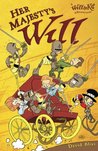
"Her Majesty’s Will" is a hilarious raucous tale about William Shakespeare before he became the epic playwright and poet now engrained in literary culture.
I began laughing from page one and didn't stop the whole way through. This is a thoroughly entertaining tale, told in a style of grandeur suitable for the personage of Shakespeare.
At times plain silly, and others coyly nuanced, the incredible plot carries on throughout the adventure. If Monty Python and Shakespeare met, this would be their book.
"Taking note of his companion's horrified stares, Kit said, “Ah yes! Traitors and scoundrels. Fear not, my friend. The fate that awaits us is quite the contrary of those poor souls, may the holy Jesus spit in their eyeless pockets.”
SCI-FI/FANTASY:
"Scythe" is a fascinating exploration of life and death in an ideal world. All struggles inherent in human life have been decimated: no war, famine, hunger. When people do die, they can be revived to experience life and death on the same timeline endlessly.
The only problem in this perfect world is the issue of overpopulation. The solution is to glean people like one would fallen leftover grain. The tool used: a scythe, except in this scenario it is not the traditional blade, but a person. Scythes are people specifically chosen and trained to kill people properly.
The Scythes are like priestly Grim Reapers. They are honoured in society, and children collect trading cards of their favourites.
Two teens are unwillingly chosen to train with the ranks of other young people to achieve the goal of becoming a Scythe. Horror, murder, mystery, and fear are calmly parts of their every-day schooling. The mental and emotional anguish is even more painful than the physical tasks involved in their new regime.
The perfect world isn't so perfect after all.
My favourite line in this book is:“I love the way it rains here. It reminds me that some forces of nature cannot be entirely subdued. They are eternal which is a far better thing to be than immortal.”
With flashes of "The Hunger Games," sentimentality of "Tuck Everlasting," and tints of "Lord of the Flies," this novel is a masterpiece of dystopian science fiction.

STEAMPUNK
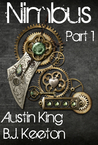
"Nimbus: a Steampunk Novel (Part 1)" is a good read for steampunk enthusiasts and those new to the genre.
On a quest to save a child, a ritual must be enacted from a mysterious book.
"Cornelius always remembered that day for a number of reasons, but mostly because that was when he realized that everything was going to change."
A pirates tale in an airship, this adventure story progresses with impending questions, mystery, and speed.
A boy, physically disabled and emotionally abused, must face his own fight. He battles prejudice, an unsupportive family, and a society that refuses to accept him for who he is. Demetrius struggles within his mind and body.
An engaging and raucous tale with sci-fi highlights and humanistic reliability, "Nimbus" will draw you in to adventure and deliver an epic discovery of mind over matter.
STEAMPUNK
Jules Verne's "Twenty Thousand Leagues Under the Sea" is the epic tale credited with birthing the steampunk genre of science fiction. The first line sets the tone: "The year 1866 was signalized by a remarkable incident, a mysterious and inexplicable phenomenon, which doubtless no one has yet forgotten."
When Dr. Aronnax, a naturalist scientist, encounters a mysterious sea beast, he is dedicated to capturing it. He is obsessed with solving the mystery of its impenetrable flesh, its ability to outrace the hunters, and the uncanny way it can submerge quickly into deeper waters, disappearing without a trace.
Tragically, Aronnax's ship sinks. Arronnax and a few shipmates are the only ones to survive. As they fight for their lives in shark infested waters, they are miraculously rescued by Captain Nemo and his monstrous submarine, the Nautilus. Aronnax is shocked at the discovery that the whale-like sea monster he had been seeking is a giant submarine.
The adventures which the strange crew experience together are more fantastical than action packed. Travelling around the world via sea provides stunning research opportunities for Aronnax. The creatures and geological wonders that Nemo points out delights the naturalist.
Breathtaking sights and joyful discoveries trail off as Aronnax uncovers Nemo's true mission for this voyage, and the vengeful plot that he lives for.

SHORT STORIES:
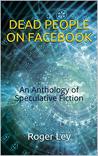
"Dead People on Facebook" What a title!
Part One: "The Martin and Estella Stories," is an exploration in genres as the main characters are featured in alternate worlds. Murder, jealousy, romance, self-love, gender identity struggles, and family separation are incorporated in bizarre twists. Heartfully, humourously, and morbidly, the out of this world collection connects human life and emotional pitfalls with esoteric plights.
Part Two: "Other Flash Fiction Stories," starts with a Christmas surprise. "Horseman" is a fun riddle of a story. This group of tales is more earthly and deliciously sanguine.
Part Three: "A Fly on the Wall," is a sample from the author's novel, "Chronoscape." Fans of Netflix's "Black Mirror" will find this snippet particularly satisfying.
Part Four: "Steampunk Confederation," is a serial novella that will light the lamps of steampunk fans. It is also a jaunty introduction to the genre for readers new to the fantastical steampunk universe.
Part Five is called "Two Autobiographical Stories." Children of the 1970s and 1980s will experience a knowing chuckle in this riff down memory lane.
I read this book as written, story by story, and was never disappointed or let down. There are no duds here. Roger Ley's writing style is eloquent without being snobbish; clear without being mundane; and boundary crushing without being silly.
One of my favorites tales is the title story, "Dead People on Facebook." The sombre name proves perfection in this modern telling of loss and love. More bittersweet than gloomy, it is a gem within a crown.
I recommend this book to all people who enjoy quick exciting cliffhangers, stories that keep you guessing, and extra-terrestrial tales that hit close to home.
Lucci's List: February 2019
MEMOIR:
"Letters to My Ex" by Anita Oswald
" Sangria Sunsets" by Edward R. Hackemer
SELF-HELP:
"The Sambuca Queen Club: Life Hacks, Health & Happiness" by Nikki Fuller
"Untying the Knot With Grace: A Guide to Amicable Divorce" by Christie Ray
ROMANCE:
"Right Text Wrong Number"by Natalie Decker
"His to Take" by Katee Robert
"Tough Love" by Skye Warren
"The Lamplighter's Love" by Delphine Dryden
SCI-FI/FANTASY:
"Jurassic Park" by Michael Crichton
STEAMPUNK:
"Snappy and Dashing" by Adam Dreece
NOVELLA:
"When Angels Play Poker" by Maura O'Leary, local author