Community Corner
Beekeeping And The World’s Oldest Fraternity
A look inside one of the symbols of Freemasonry.

This is a paid post contributed by a Patch Community Partner. The views expressed in this post are the author's own, and the information presented has not been verified by Patch.
By Chase Kruppo, Madison Lodge
Freemasons come from all walks of life and have different reasons for joining. The author joined Madison Lodge around the same time as several colleagues from Fairleigh Dickinson University, while completing my undergraduate degree in management. He joined the lodge because of Freemasonry’s history, art, and symbols that convey deeper meaning and invite further understanding. There are many symbols of the fraternity, each an emblem of some moral precept or charge to uphold one’s self in their community, family, and in their faith.
Find out what's happening in Madisonfor free with the latest updates from Patch.
Beekeeping has been a side project since 2009, after meeting a Canadian bee researcher who was in Morristown while studying Colony Collapse Disorder (CCD) at a nearby apiary (or bee yard). She explained the benefits of comb honey and that consuming a bit each day during the pollen flow alleviated seasonal allergies. A few years later after reading up on the subject and taking an online course in beekeeping through Penn State, Chase set up a couple hives on some family acreage in the Catskill Mountains of New York and, since 2013, has been producing small-batch quantities of raw, treatment-free cut-comb honey as Chasing Honey Farm.
The Symbolism of Freemasonry
Find out what's happening in Madisonfor free with the latest updates from Patch.
When people ask, “What Is Freemasonry?”, there is a concise answer from the ancient ritual. “It is a beautiful system of morality, veiled in allegory and illustrated with symbols.” One interpretation is that it’s a way of explaining unobjectionable moral precepts and universal truths, told through the historical lens of the construction of King Solomon’s Temple in Jerusalem, and marked by the symbolism of the stoneworker’s tools, hence the “masonry” part of Freemasonry.
Several months after becoming a member of Madison Lodge, Chase found out his great-grandfather had been a Mason in Elmhurst, Queens. So, in short order he went from relative outsider, to active member, to inheriting his great-grandfather’s Bible and masonic apron.
Many of the symbols of Freemasonry are biblical in origin, with oral traditions becoming codified ritual in the early 1700s in northern England. And many of the biblical symbols themselves have ancient meaning, spanning the early cultures of the known world. The adoption of various symbols by the fraternity and their interpreted meanings help to tell the story of the fraternity; the mythos and ethos to which Masons subscribe.
Freemasonry is a rich, semiotic, tradition whereby the meaning of the symbol is further interpreted for some deeper, personal understanding.

The Beehive
One ancient symbol is the beehive, which represents industriousness. The bee has been used to symbolize hard work and working together for over 2000 years. Honey was the world’s first sweetener until the expansion of the sugar cultivation to the Middle East from India around 500-600 CE and its producers have been respected for as long.
Freemasonry uses this allegory and the representation of a hive with seven bees to illustrate that we are born into the world of rational and intelligent beings, and that more can be gained by working in unison than alone. The earliest confirmed use of the beehive in Freemasonry dates back to about 1727.
There is a somewhat ironic twist to the bee reference. The common idiom, “Busy as a bee.” goes back to at least the 14th century when Geoffrey Chaucer’s The Canterbury Tales, penned:
“... In wommen been! for ay as bisy as bees.”
Although Chaucer’s tone in the Epilogue of The Merchant’s Tale is less than complimentary, it marks an indelible, modern understanding of the nature of the hive of the honeybee. As a matter of fact, a healthy hive is composed of 85% female workers and their queen. 15% of the hive are male drones, which aside from mating with a new queen, simply consume resources and do not contribute to the work of the hive. “In wommen” indeed.
The Hive Signifies Mutual Dependence
The Merchant’s observation illustrates the reality of the insect world. The beehive is a superorganism that cannot sustain itself without the individuals (some 50,000 bees in a given colony). Nor can the individual bee live more than a few days without the structure, resources, and cooperative support of the hive. A hive, weakened and depopulated by disease or misfortune, will collapse when there are fewer than the critical population size of 1,000 bees.
A queen bee can lay 2,000 eggs per day, with worker bees hatching 21 days later. In the northeast United States, hives are active from around March to October. Bees that will only live 2-4 weeks at a time in peak season. Only a small handful will go into a type of dormancy through the winter. A worker bee may produce only 1/12th of a teaspoon of honey in its lifetime. It is only as a hive that the bees produce honey in any quantity, let alone the excess honey that is harvested by beekeepers. Alone, the bees starve and die of exposure after just a few days.
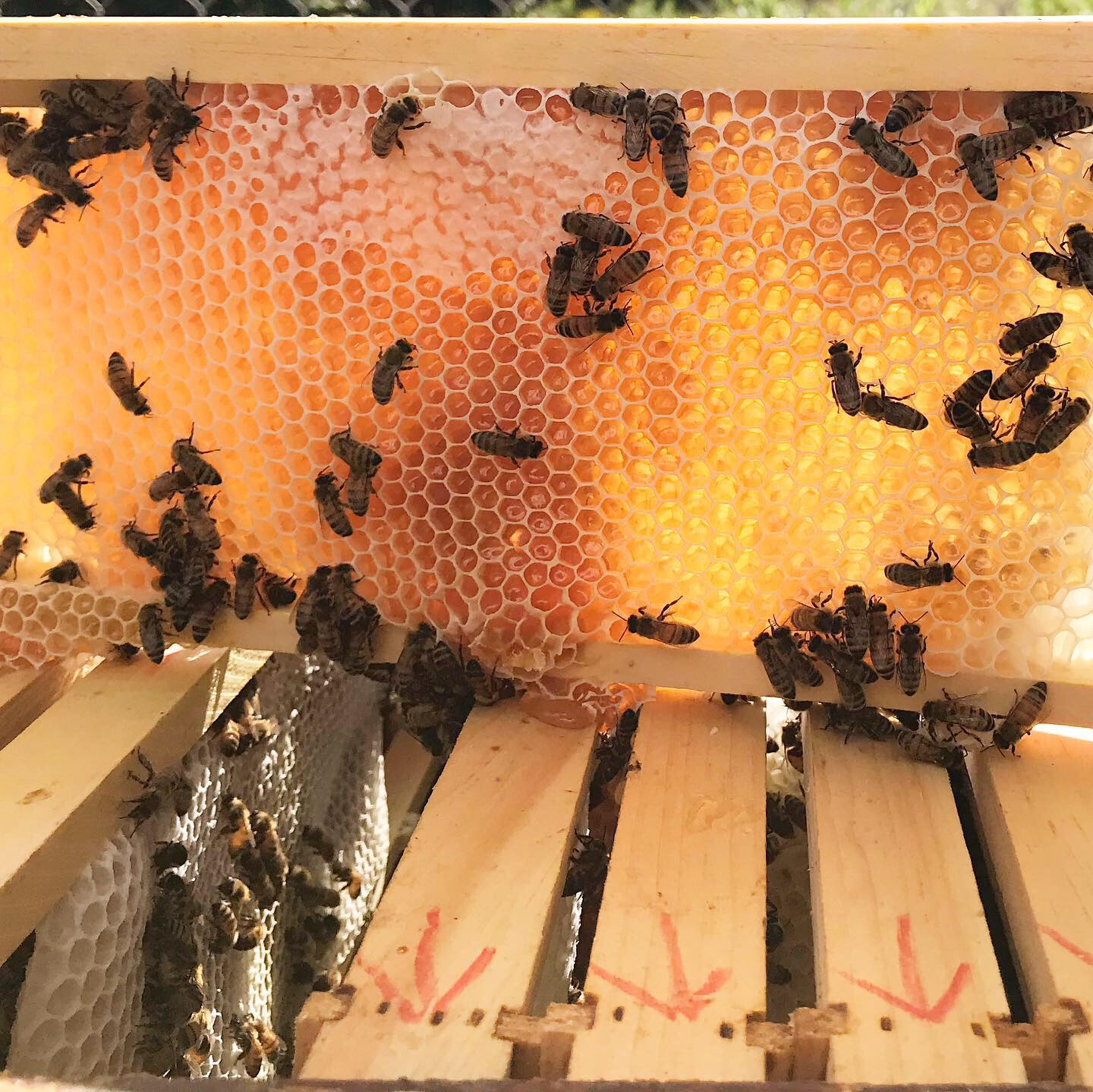
The painful observations of a colony of bees that has collapsed, barren of resources, robbed out by wasps and ants, their hive invaded by nesting field mice, is itself emblematical at times of Freemasonry itself. Like many community organizations that rely on the involvement of the community and the engagement with the public, Lodges are symbiotic.
Among other fraternal organization Freemasonry has suffered the decline evidenced in many groups that meet in-person, out-of-home. However, it is finding new footing amidst a global pandemic that has stretched the limits of our virtual interactions. We have phones. We have the internet. What we lack under quarantine, however, is human presence, touch, and what Masons describe as “the reciprocal intercourse of kind and friendly acts” in which “we promote the welfare and happiness of one another.”
What we see on the screen, we know is a pale representation of real-life. The book is better than the movie. The movie theatre is better than a 4” screen. The Broadway theatre production is better than the digitally streaming version. The concert, better heard live than on an album. As our work and even our doctor appointments and schools have moved online, perhaps temporarily, we know that there is no substitute for the true thing. What passes for community, communication, and human interaction in an age of pandemic, leaves many of us longing for things that are substituted for very poorly in a virtual, digital space.
The world over, Freemasonry is at the same time lamenting the temporary separation in the physical spaces we share while taking up the baton of the future and running with it. While the substantial landmarks that define our fraternity are cemented in tradition, the promise of a better tomorrow and the adoption of new technology like online meetings and virtual communication open the fraternity new horizons.
Freemasons continue to offer true experiences in brotherhood, friendship, community, service, lifelong self-awareness and self-improvement. Live, in-person, augmented by technology, and adapted for the next generation. Like many institutions, in less than a year, masonic lodges changed to meet the new norms. Many lodges were already tech savvy. Others are learning quickly and realizing the potential for renewal.
The Hive also symbolizes renewal.
Each season churns the colony. Old bees fall weak and die. New bees are raised. The workers build and forage. The drones, idle, are culled in the winter. Honeycomb brown with age is replaced to make room for dazzling white virgin honeycomb, the wax of preference used for liturgical candles and cosmetics. A hive that survives the winter explodes in growth with the spring pollen flow.
The pandemic allows us to reexamine our routine, critically observe who we are and what we purport to be. Freemasonry doesn’t offer paths to enlightenment, religious nirvana, earthy riches or the high-powered connections of Dan Brown novels and National Treasure fascinations. What Freemasonry does offer is real connection, true fellowship, and timeless values. While by no means “perfect”, Masons throughout the world make the effort to associate with genuine and quality people, who share goals of improving themselves and their communities.
The Masonic lodge, as a hive, is a superorganism. It persists as the workers come and go yet cannot exist without them. Although, unlike bees, human individuals are capable of independent survival. Masons often reflect upon the passage in Psalm 133, “Behold, how good and how pleasant it is for brethren to dwell together in unity!”
We are always looking to support and engage the communities in which we live and work. We are happy to answer questions about the lodge, freemasonry, and membership through our website and Facebook page.
.jpg)
This is a paid post contributed by a Community Partner, a local brand partner. To learn more, click here.